Discussion Religious Values Test

I don't think xe is.
Ofc le interweb therefore nothing you see is true but well I don't feel like it is bait.
What questions me is how an unironic tranny got on the sharty in the first place, and why xe decided to stay despite the heavy anti-trans sentiment
It’s bait dude!
Trannies that use Chans have a hate boner for soyjaks!
They are a bit different than “normal” trannies from twitter or shitcord,they prefer other stuff basically
 
Being a tranny goes against the christian theology of creation, design and sin. At it's core.
I've offered you to talk about it, if you want we can go into it, I'm up for it
I don't like talking about theology of any religion because it always looks like meaningless Asiatic babble.
What do you mean by this? Because it sounds like niggertrannybabble
Most of what is considered to be an undeniable part of Christianity, like beautiful cathedrals, joyous holidays etc is a pagan legacy. And that's not a bad thing, because when the British and American puritans tried to purge Christianity of idolatry, they got Orthodox Judaism with Jesus(This probably explains American passionate love for Israel - they see themselves in the Jews).
 
Most of what is considered to be an undeniable part of Christianity, like beautiful cathedrals, joyous holidays etc is a pagan legacy. And that's not a bad thing, because when the British and American puritans tried to purge Christianity of idolatry, they got Orthodox Judaism with Jesus(This probably explains American passionate love for Israel - they see themselves in the Jews).
Or took it from some modern secular "historian"s schizo ramblings.
 
I don't like talking about theology of any religion because it always looks like meaningless Asiatic babble.
Theology is the mathematics of your own beliefs, as is philosophy.
Except greek philosophy places gods under the logic of the worlds, and jewish philosophy aka early theology places the laws of the world under the existence of God. Not that the world may not prove God, but that God is at the heart and source of the world's laws.

Without theology you believe in something without knowing why. And since the core of christianity is believing that Jesus rose from the dead, you already have to believe something pretty extraordinary in order to call yourself a christian. If you don't know why you believe in that, what point is there in believing at all ?
Most of what is considered to be an undeniable part of Christianity, like beautiful cathedrals, joyous holidays etc is a pagan legacy. And that's not a bad thing, because when the British and American puritans tried to purge Christianity of idolatry, they got Orthodox Judaism with Jesus(This probably explains American passionate love for Israel - they see themselves in the Jews).
>Implying that the british and american puritan were the ones to hold the truth about what is idolatry and what isn't.
I grew in an exclusive plymouth brethren assembly, which is basically the pinacle of this movement. I detach myself mostly from it now.
1) They're a massive minority of christianity
2) It ISN'T orthodox judaism with Christ, there is very very few things that actually look like orthodox rabbinic judaism anywhere in christianity, what would look most like it would probably the Eastern Orthodox Church for how mystical it is. If anything, christian reformed fundamentalism ressembles more like free masonry than anything else.
3) As said above, the very multiple theories about the pagans origins of christian feast are made up, and this can be seen by few things :
- The unicity of their sources, which come from single historian or archeologists who were mocked by their conteporaries
- The historical incoherences that surround them.

Exemple : One theory suggests Easter comes from the goddess Eostra, which was a german goddess we know very little about, but which very likely was celebrated during the month of Eostremonath, which gave the name to "Easter" in english because Easter was also celebrated during this month. This goddess was first attested to by a christian author named St Bede, but since Easter was celebrated by christians way before they ever encountered germanic tribes, and since the name of Easter in other languages isn't based on the name of the month, but on the name of "passover", as in french "Pâques" (because that is when Christ rose from the dead according to scriptures), we can very easily deduct that this was made up.

I advise you not to listen to everything you hear, and to question yourself as to why there are so many different theories that nobody agrees on about the alleged pagan origins of christian celebrations

 
Last edited:
2) It ISN'T orthodox judaism with Christ, there is very very few things that actually look like orthodox rabbinic judaism anywhere in christianity, what would look most like it would probably the Eastern Orthodox Church for how mystical it is.
I'd say that award goes to Oriental Orthodoxy like the Armenian/Ethiopian/Coptic Churches. I agree on everything else.
 
I'd say that award goes to Oriental Orthodoxy like the Armenian/Ethiopian/Coptic Churches. I agree on everything else.
Yeah I was saying that mostly in comparison to the other two big branches of christianity aka protestantism and catholicism.
The EO, much more than the two others, work a lot with mysteries and the living of practices rather than intellectual research, as does the West. Orthodox Rabbinic Judaism does that a lot too, but to a degree you can argue that this is a direct consequence of the more strict following of ancient rites rather than the "constant reform" theology of the West. Like jews, the Orthodox Church really has it's mind focused on the transmission and strict following of oral and written Tradition, which it considers all holy.

But yeah maybe, you're right I'm not as familliar with the oriental rites as I should be
 
Except greek philosophy places gods under the logic of the worlds, and jewish philosophy aka early theology places the laws of the world under the existence of God. Not that the world may not prove God, but that God is at the heart and source of the world's laws.
That's what I meant. Classical greek philosophy, if exaggerated, can be reduced to simple truths like "be polite", "wash your hands before eating", etc. It's an instruction for living a decent and happy life. That's why "love of wisdom".
Jewish/Arabic/Persian/Indian/Chinese philosophy is just meaningless babble about which side to wear the sacred kaftan, how to fold the fingers and which foot to hop on when worshiping Rama. For the Zoroastrians, even the putting on the belt developed into a whole sacred ritual. Imagine a "philosophical argument" about how many knots you have to tie on your belt to please God. That's what all theology is about. This is why, when I talk about Christianity or Paganism, I mean their culture, behavior, and life attitude, not the number of knots on their belt.
Without theology you believe in something without knowing why.
Belief is a very personal thing. It always comes from within and cannot be proved or explained.
2) It ISN'T orthodox judaism with Christ, there is very very few things that actually look like orthodox rabbinic judaism anywhere in christianity, what would look most like it would probably the Eastern Orthodox Church for how mystical it is.
Russian pre-revolutionary Orthodoxy was very similar to Scandinavian Protestantism and Anglicanism. Tsar was the head of the Church, the Church itself was governed by a secular Oberprokuror. The theology of the Russian Orthodox Church is not particularly developed in comparison to Western theology, because the government was not particularly interested in it, and the population did not care about it. As for the rest of orthodoxy, I don't know, but I doubt anything serious could have emerged there. Ottomans, you know.

As for the Puritans, I think the connection is obvious. They tended to name their children using only biblical(jewish) names, venerated the Old Testament even more than the New Testament, and generaly looked like Chabadians. They considered America as a sacred land and themselves as the chosen people.
3) As said above, the very multiple theories about the pagans origins of christian feast are made up, and this can be seen by few things :
- The unicity of their sources, which come from single historian or archeologists who were mocked by their conteporaries
- The historical incoherences that surround them.
It's best to trust common sense in this case. Any social life is filled with holidays. Obviously, for hundreds of years of existence of a cultured roman society, thousands of festivals were organized throughout the empire, and there were certain traditions aboit it. It would be strange to believe that Christians just invented all the holidays that happened to coincide with the Roman celebrations of various deities. And about archaeology... I recommend looking into the Birch Bark Manuscripts. This is absolutely ridiculous. Official archaeology suggests that medieval Novgorod was almost 100% literate. And thanks to what? Thanks to the special Novgorodian democracy! When the government needs it, archaeology can override common sense.
 
That's what I meant. Classical greek philosophy, if exaggerated, can be reduced to simple truths like "be polite", "wash your hands before eating", etc. It's an instruction for living a decent and happy life. That's why "love of wisdom".
Jewish/Arabic/Persian/Indian/Chinese philosophy is just meaningless babble about which side to wear the sacred kaftan, how to fold the fingers and which foot to hop on when worshiping Rama. For the Zoroastrians, even the putting on the belt developed into a whole sacred ritual. Imagine a "philosophical argument" about how many knots you have to tie on your belt to please God. That's what all theology is about. This is why, when I talk about Christianity or Paganism, I mean their culture, behavior, and life attitude, not the number of knots on their belt.

Belief is a very personal thing. It always comes from within and cannot be proved or explained.

Russian pre-revolutionary Orthodoxy was very similar to Scandinavian Protestantism and Anglicanism. Tsar was the head of the Church, the Church itself was governed by a secular Oberprokuror. The theology of the Russian Orthodox Church is not particularly developed in comparison to Western theology, because the government was not particularly interested in it, and the population did not care about it. As for the rest of orthodoxy, I don't know, but I doubt anything serious could have emerged there. Ottomans, you know.

As for the Puritans, I think the connection is obvious. They tended to name their children using only biblical(jewish) names, venerated the Old Testament even more than the New Testament, and generaly looked like Chabadians. They considered America as a sacred land and themselves as the chosen people.

It's best to trust common sense in this case. Any social life is filled with holidays. Obviously, for hundreds of years of existence of a cultured roman society, thousands of festivals were organized throughout the empire, and there were certain traditions aboit it. It would be strange to believe that Christians just invented all the holidays that happened to coincide with the Roman celebrations of various deities. And about archaeology... I recommend looking into the Birch Bark Manuscripts. This is absolutely ridiculous. Official archaeology suggests that medieval Novgorod was almost 100% literate. And thanks to what? Thanks to the special Novgorodian democracy! When the government needs it, archaeology can override common sense.
I'll answer tomorrow nigga, need to sleep rn
 
55D5F5BE-316F-49F6-B831-429E0C20CA41.jpeg
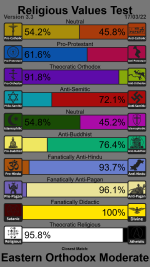
Closest Match: Christian Theocrat
huh
 
First question on the test is "Should Catholics rule the world" like damn, this will sure be useful when it tells me if I like catholics or not.

Here's my condensed test for everyone to use:
-Are you a catholic? Do you like them?
-Are you a protestant? Do you like them?
-Are you orthodox? Do you like them?
-Are you a jew? Do you like them?
-Are you a muslim? Do you like them?
-Are you a buddhist? Do you like them?
-Are you a hindu? Do you like them?
-Are you a pagan? Do you like them?
-Are you a satanist? Do you like them?
-Are you religous person? Do you like them?
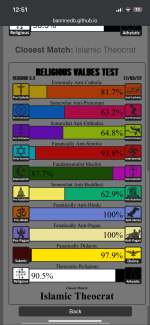
The questions correspond to the dimensions of the above test as presented in screenshots, in the same order from top to bottom. The first question is weighted double the second. If you don't know if you are, you aren't.

I don't have time to set up a website to help people take this as a test (too busy building robots) This format might be better. I would kind of like to see if later questions on this test help provide some insight, like if so called "gnostic" branches of christianity like mormonism would score as more satanist due to a focus on knowledge. I can't, because I'm not going to answer "do you believe __ happened?" for a bunch of religions just to see if they have some interesting classification logic.
 
First question on the test is "Should Catholics rule the world" like damn, this will sure be useful when it tells me if I like catholics or not.

Here's my condensed test for everyone to use:
-Are you a catholic? Do you like them?
-Are you a protestant? Do you like them?
-Are you orthodox? Do you like them?
-Are you a jew? Do you like them?
-Are you a muslim? Do you like them?
-Are you a buddhist? Do you like them?
-Are you a hindu? Do you like them?
-Are you a pagan? Do you like them?
-Are you a satanist? Do you like them?
-Are you religous person? Do you like them?
The questions correspond to the dimensions of the above test as presented in screenshots, in the same order from top to bottom. The first question is weighted double the second. If you don't know if you are, you aren't.

I don't have time to set up a website to help people take this as a test (too busy building robots) This format might be better. I would kind of like to see if later questions on this test help provide some insight, like if so called "gnostic" branches of christianity like mormonism would score as more satanist due to a focus on knowledge. I can't, because I'm not going to answer "do you believe __ happened?" for a bunch of religions just to see if they have some interesting classification logic.
Having a real test give you your denominations / specific sects or school of thought on religion based on your beliefs would be pretty neat too.
This is bs, agreed
 
clearly i do NOT know the meaning of some of these questions bc i am in no way islamaphobic 😭
but anyway i dont even hate christianity either what the freak guys
 

Attachments

  • IMG_8766.png
    IMG_8766.png
    540.8 KB · Views: 37
clearly i do NOT know the meaning of some of these questions bc i am in no way islamaphobic 😭
but anyway i dont even hate christianity either what the freak guys
Islamophobic isn't really the correct word, it's just if you don't vote entirely on the pro-Islam side you get some Islamophobic because the points have to go somewhere
 
Back
Top